

Facing Your Demons
A story of courage

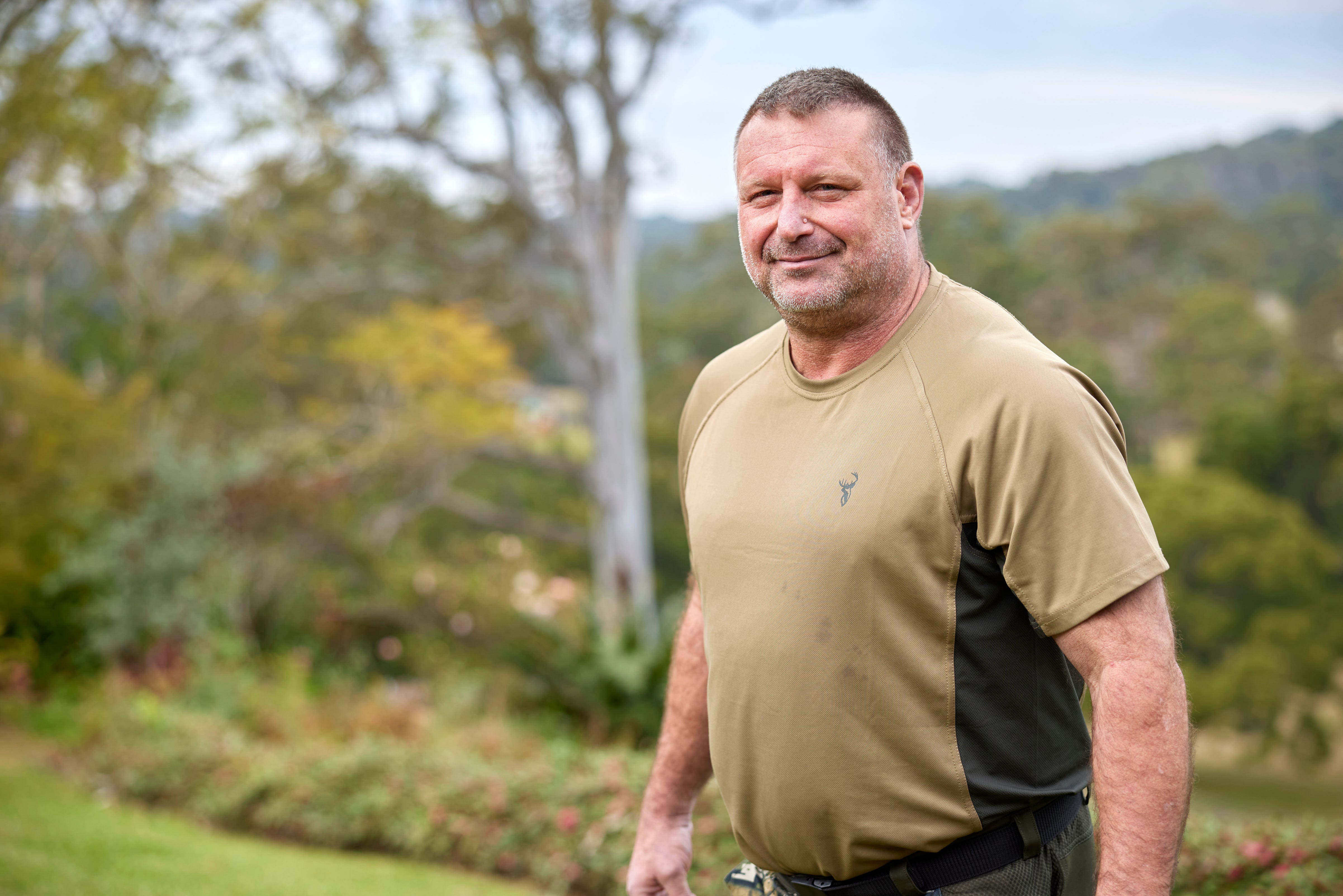
Judy Matten has watched Scott Seccombe become the local go-to bloke for veterans — ringing ministers, storming Parliament, refusing to back down. What Judy sees as one man’s fight for people who have no voice, Scott experiences as an ongoing battle with the anger and demons he’s spent a lifetime learning to face.
In every Finding Courage story, one person sees another’s courage. The other lives it.
SEEN BY JUDY MATTEN…
My family and the Seccombes, Scott’s adopted Mum and Dad, have been locals forever and a day, so I’ve come across him here and there over the years.
I knew he’d been in and out of the army, but I didn’t know him well.
Then he came into Calvary, the nursing home where I work, looking for care for his dad and I helped him get a place.
After that, when Scott would come to visit his Dad, we’d have a good old yak about all kinds of things. That’s how I got to know about his work standing up for Veterans.
He really has gone into bat for people.
He’s told me stories about ringing up the Minister, going into Parliament, pushing for what he feels is right.
Once, he told me about a young veteran who committed suicide. The Government only gave the family a small amount toward the funeral; at the same time they were giving Brittany Higgins all this money. Where’s the justice in that?
Scotty has always been loud. He says what he thinks. People may not like it, but that’s just too bad.
Good on him for sticking up for people who don’t have a voice. That takes courage.
He’s certainly got his demons.
Quite possibly it’s going into bat for other people that has helped him battle through those demons.
LIVED BY SCOTT SECCOMBE
An Angry Young Man
I’ve always had anger issues.
I loved the army because the angrier and more aggressive I was, the more fuel they threw on it and the more responsibility they’d give me.
My Dad and his brother owned a big trucking and sawmill business in Coffs Harbour. It was an alpha male environment. The measure of a man was in punch-ups and how much piss you could drink.
When I left school at 16, I went to work at the sawmill. My father was a hard man. I didn’t like my uncle and he didn’t like me.
My two cousins were extremely hard workers. One’s a truck driver. One’s a sawmiller. I’m neither. Basically, I was being paid by Daddy to do nothing.
I found out later that when I signed up for the Army, my dad bet $100 I’d be back in a week. He saw this undisciplined, spoiled brat. But I was just a young man trying to find my way.
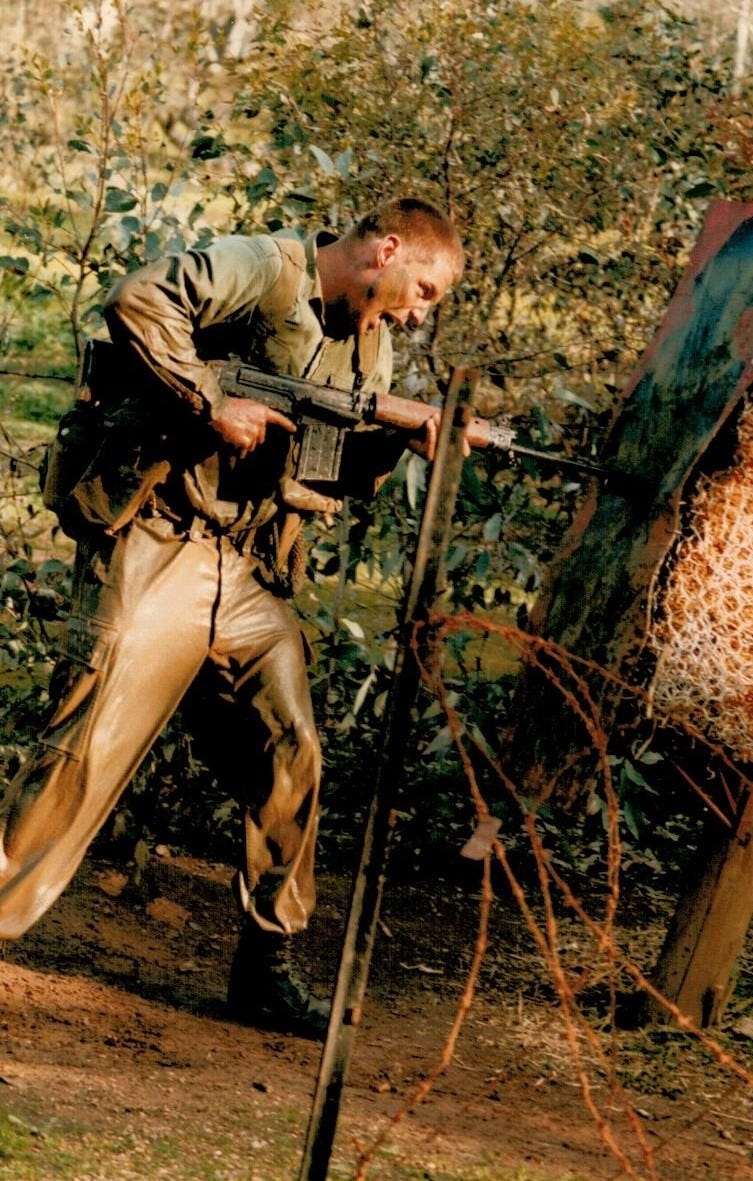
In the army, I could be my own person
.
The Most Violent Fun
I just loved being a soldier. I became a corporal in the Australian Engineering Corps. It was in every bone of my body.
I was driven to prove people wrong about me, so I volunteered for everything. There was nothing I wouldn’t do.
I’ll never forget, I did an unarmed combat course. It was two weeks of solid getting the shit kicked out of you every day. It was the best course I’ve ever done in my life. The most violent fun.
There was a sense of adventure. I got to serve in Malaysia, did an exchange with the King’s own Scottish Borderers in Edinburgh, and went to Canada and England.
I spent a month in Bosnia in 1997 with the British Army. That was the pinnacle of my career. I shot more rounds and blew up more crap with the British Army than I did my whole military career. It was a shit show, the whole place. There were three groups of people shooting at each other, and we were there as peacekeepers. I didn’t give a rat’s about the politics. I was just there to find some landmines and blow things up.
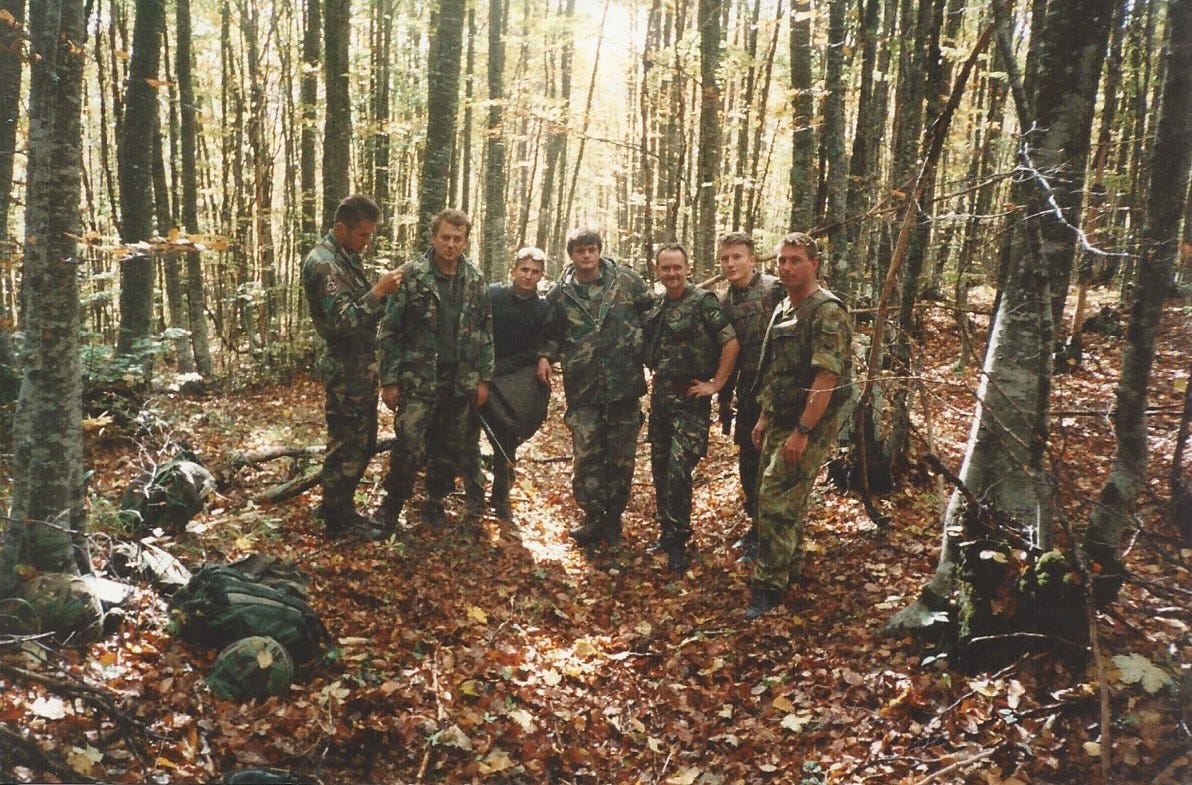
One of my staff sergeants used to say to me, “We should put you in a glass cabinet that says, ‘Break in case of war.’”
I was a good soldier.
An Animal Let Loose on Society
I was medically discharged with severe osteoarthritis in my right leg. They offered me a two-year waiver to stay on as an instructor, but I had joined the army to be a soldier.
When you get out on civvy street, your mind can’t cope. Nothing you’ve done in the military counts. I was qualified in mine warfare, landmine demolition, unarmed combat and bomb search. I was running on adrenaline. I couldn’t see myself selling fridges at Harvey Norman.
So I did some debt collection work, and my wife, Leanne, and I started Extreme Skirmish, which offered high-adrenaline, physical skirmish experiences. I could just be my angry self.
The business was a success because people loved the adrenaline rush, but I was an animal let loose on society.
I often joke that I am the nightmare of many young men in Coffs Harbour. I remember one bloke. I had him by the ears, with his nose in my mouth. I was going to bite his nose off when he started crying.
My drinking was out of control. I would drink until I passed out, get up and go to work the next day. Running up hills and screaming at people all day.
Later, I talked to Barnaby Joyce about this. I was trained to kill a man with my bare hands seven different ways, and the Defence Force let me loose on society. No one should be surprised that soldiers fall off the edge, neck themselves or drink themselves to death.
Hitting the Wall
I hit the wall in 2009. I’d tried to seek help before, but psychologists just didn’t seem to work for me. Then one day I just didn’t get out of bed.
That was the start of the journey of recovery. I reached out to Open Arms. I engaged with the psychologist. Leanne and I went to a PTSD course together. I was prescribed my “anti-murder pills”. All this stuff started to bubble up to the top.
Two years later, we closed the business, and I went on a full pension. Leanne now gets a small payment as my carer. I was a broken old man.
Standing with Soldiers Again
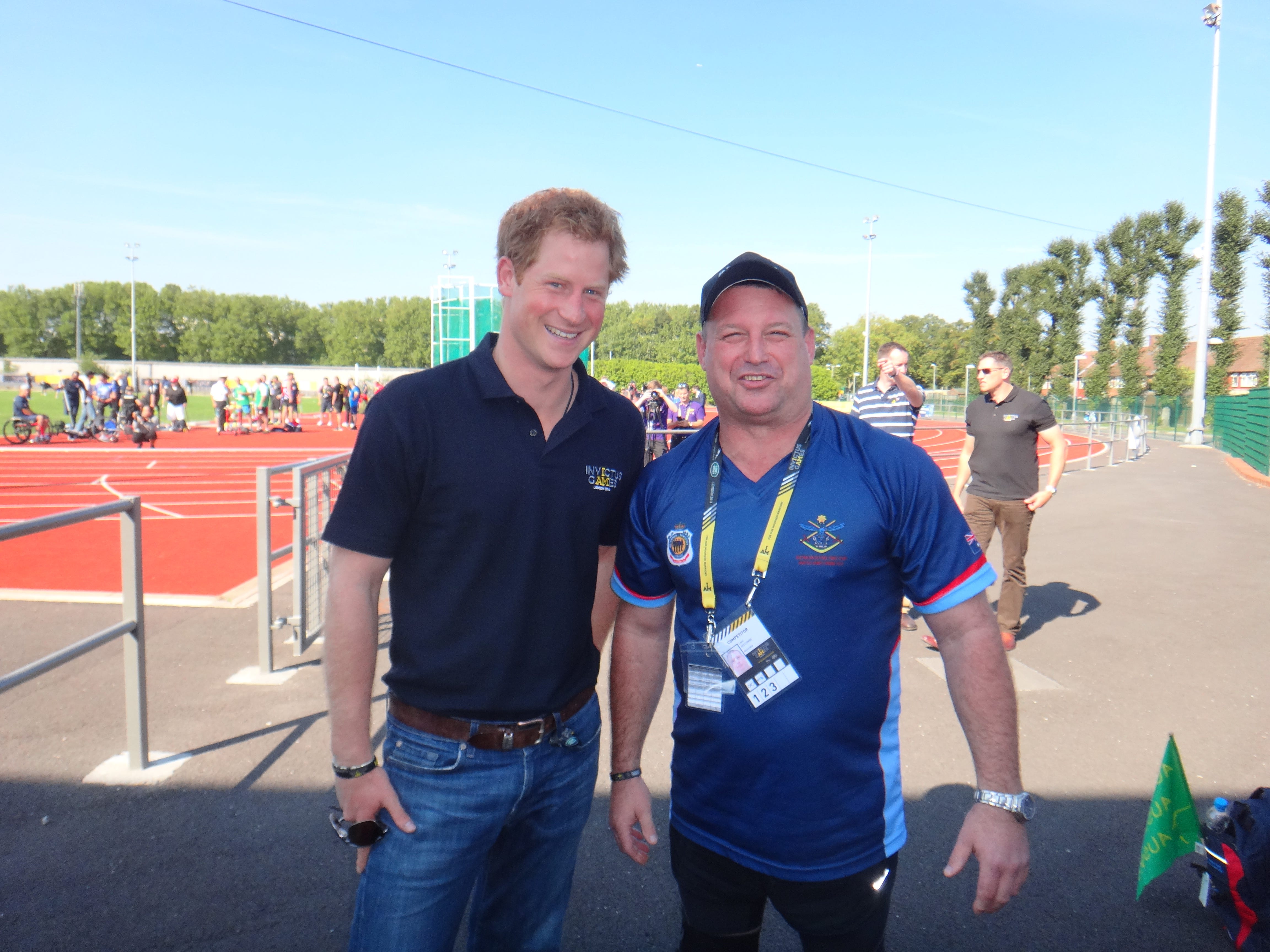
In 2014, I was asked to go to the first Invictus Games. It was an amazing experience: cathartic. Suddenly, I was standing with soldiers from around the world who had been in the same theatres as me. The next year, I went to Gallipoli with my friend John. That friendship helped. And then came the greatest change. On Boxing Day 2015, I stopped drinking.
I’m in the process of writing about my life, and the writer I’m working with did an interview with my son James. I get teary when I listen to that interview because my son talks about the father of one of his mates who didn’t stop drinking and how that family imploded. Our family didn’t.
Not drinking didn’t take away my anger. It made me aware. I could see the impact of my drinking. The impact of my actions. The impact of everything.
Once you start to see what you have been, you have a choice to change it. Now I had an opportunity to decide: when I get out of bed, will I be that arsehole?
The Go-To Bloke
What I do now is I try to help veterans in my hometown. I’m the go-to bloke. If someone needs to shake a cage or make something change, they usually ring me up. I go into bat for people. I do a bit of negotiating with insurance, lobby the Defence Forces, talk to parliamentarians, use my experience to help people who don’t understand the system.
I often get veterans within 12 hours of suicide.
One time, my Dad was in palliative care in Calvary, and I was visiting my son in hospital in Port Macquarie. My son was getting out the next day. I’d taken my anti-murder pills and gone to bed. I wake up to the phone ringing. It’s this veteran screaming at the top of his lungs. He’s sitting at his dining room table with his life insurance policy. He’s underlined where it says suicide doesn’t pay and is yelling about having a car accident.
We talked for about two hours, and he gave me his word he’d take his medication and go to bed.
The next morning I wake up to a text: my father had passed away. I go check on my son and tell him I’ve got a veteran on a cliff and a funeral to organise. He said, “I’m ok, you can go.”
On the drive home, I get on to the Minister’s office. I scream at them, “By the time I get to Coffs Harbour, I want you to have this sorted. I don’t care how you do it; I’ve got to sort out my father’s funeral.” I was beside myself.
And that’s the world I live in. I’m confronted all the time by veterans who are just lost. They can’t help themselves. Can’t speak for themselves.
To have people put that much trust in you to actually fix things for them…. How do I do that? I don’t know. The ability to understand, to have empathy and clarity in a crisis. I don’t even know how I pull it off.
But that vet who was yelling down the phone the night before my Dad died, he’s still alive. He’s paid off his house now. His kids have a trust fund set up.
Facing Demons
All that anger: I’m learning how to channel it in a more productive way.
I would say that courage is being able to confront adversity and work through it. Not be scared of it. Not run away from it.
I’m still angry. That’s always going to be a part of me. But I can choose to be someone that makes someone’s life a little better.
The biggest challenge has been to face my demons. To sit there and go, “I’m an arsehole. What am I going to do about it?” That’s taken courage.
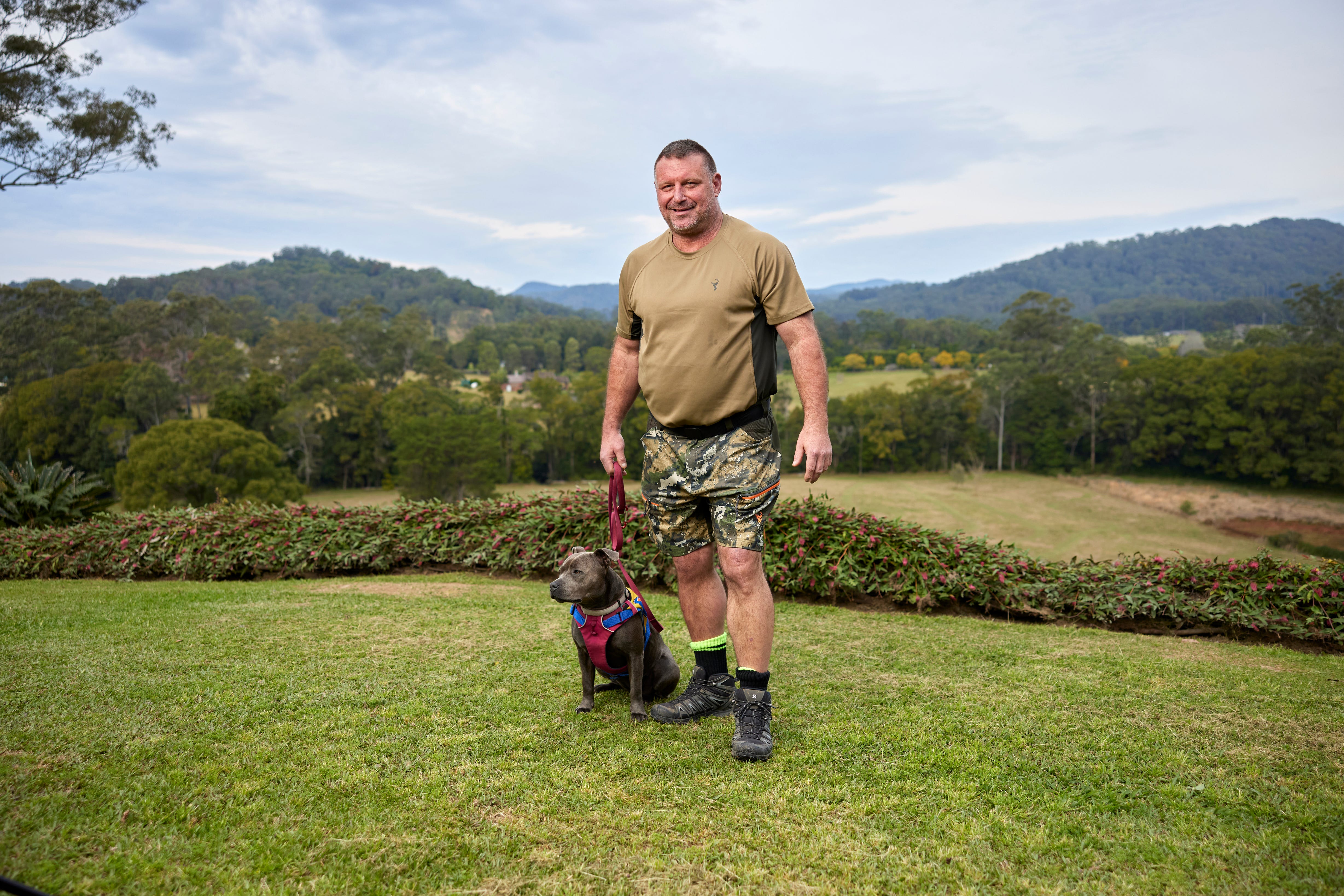
Photos provided by Scott Seccombe
Meet Smurf
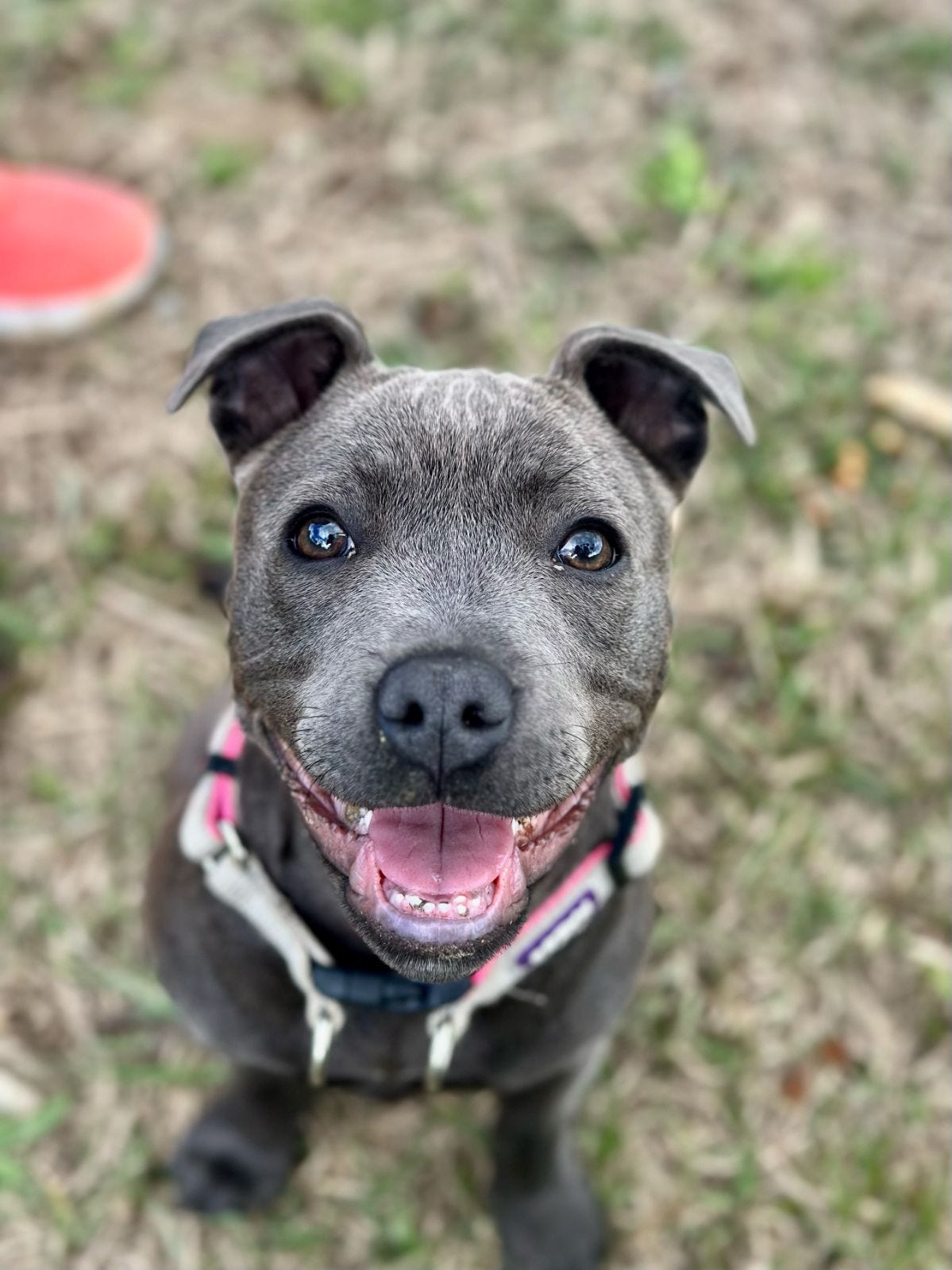
This 3-year-old Blue Staffy goes everywhere with Scott these days. He is a certified psychiatric assistance dog, trained by Scott under the supervision of mindDog. It’s easier to face your demons with a friend like Smurf beside you.
This is such an amazing story. Scott is disarmingly honest, which is so refreshing. Courage indeed.